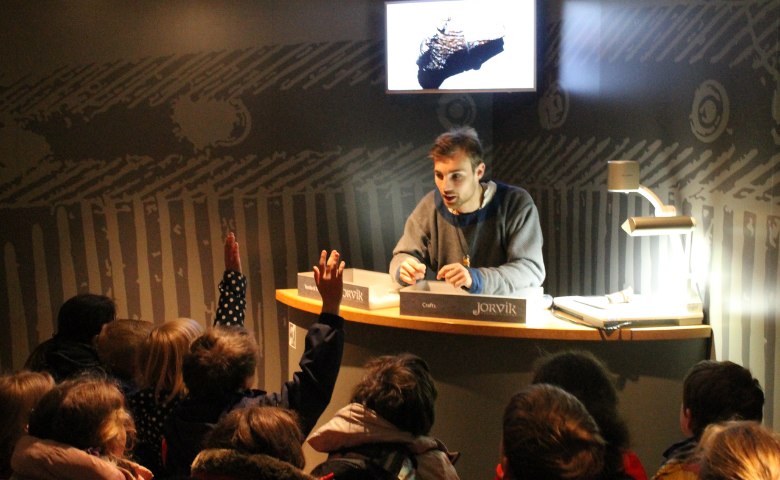
York Archaeological Trust (YAT) is an educational charity operating in the museum and archaeological sectors. It is best known for developing and running the JORVIK Viking Centre, which has enabled over 20 million visitors to experience life as it would have been in 10th-century York.
YAT received a grant of £48,000 from our Sustainability Fund in spring 2022 to make environmental improvements at their three museums: JORVIK Viking Centre, DIG, an Archaeological Adventure and Barley Hall Medieval Townhouse.
Sarah Maltby, Director of Attractions, shares YAT’s experience of applying to the Wolfson Sustainability Fund.
Tell us about your project
In 2014, we undertook a green audit as part of the Greener Museums Project. This highlighted several environmental improvements which we started to address. Unfortunately, these were interrupted first by the flooding in 2015 which destroyed JORVIK, and then by the COVID pandemic.
Our project funded by the Wolfson Sustainability Fund allows us to continue this extremely important work at our accredited museums: JORVIK, DIG and Barley Hall. We want to make environmental improvements both in our front and back of house operations. We will install LED lighting, upgrade air handling units, add new insulation and timers for water usage and review our building management systems.


Why did you apply to the Sustainability Fund? Why is it important to you to improve sustainability across your sites?
YAT recently completed a strategic review which includes the aim that ‘YAT will be economically, environmentally, and socially sustainable, and grow.’
Sustainability can be seen from economic, environmental and social perspectives. It is fundamentally important that we achieve a sustainable future in each, and each can influence the other.
We need to build financial resilience through the delivery of our museums, operating them cost-effectively and sustainably. The environmental improvements we will make will help us to reduce our carbon footprint and cut costs.
What impact do you hope the grant will have on your financial and environmental sustainability?
Using online tools, we have identified that the proposed improvements in this project will save approximately 73 tonnes of carbon dioxide per year, moving us closer to our net zero carbon goal.
We also expect to save nearly £11,000 per year in energy costs, possibly even double this amount. This is a 10–20% saving on the estimated utility costs for 2022–23 at our museums.
Now you have been awarded the grant from the Sustainability Fund, what are your next steps?
All of the works will be completed within one year between September 2022 and August 2023. As we are open 362 days a year, this will mean we can undertake front of house improvements during the quieter winter months and back of house improvements during the peak visitor periods without disrupting visits to our museums or negatively impacting on visitor numbers.
Jessica Warner, Head of Funding at the Wolfson Foundation, added: ‘York Archaeological Trust put together an excellent application that enabled us to easily understand the project’s financial and environmental benefits. They provided compelling evidence of the impact each intervention would make. What made the application especially strong was demonstrating that the project was part of a considered strategy to make the organisation more sustainable, with thought given to improvements that would make the greatest difference.’